



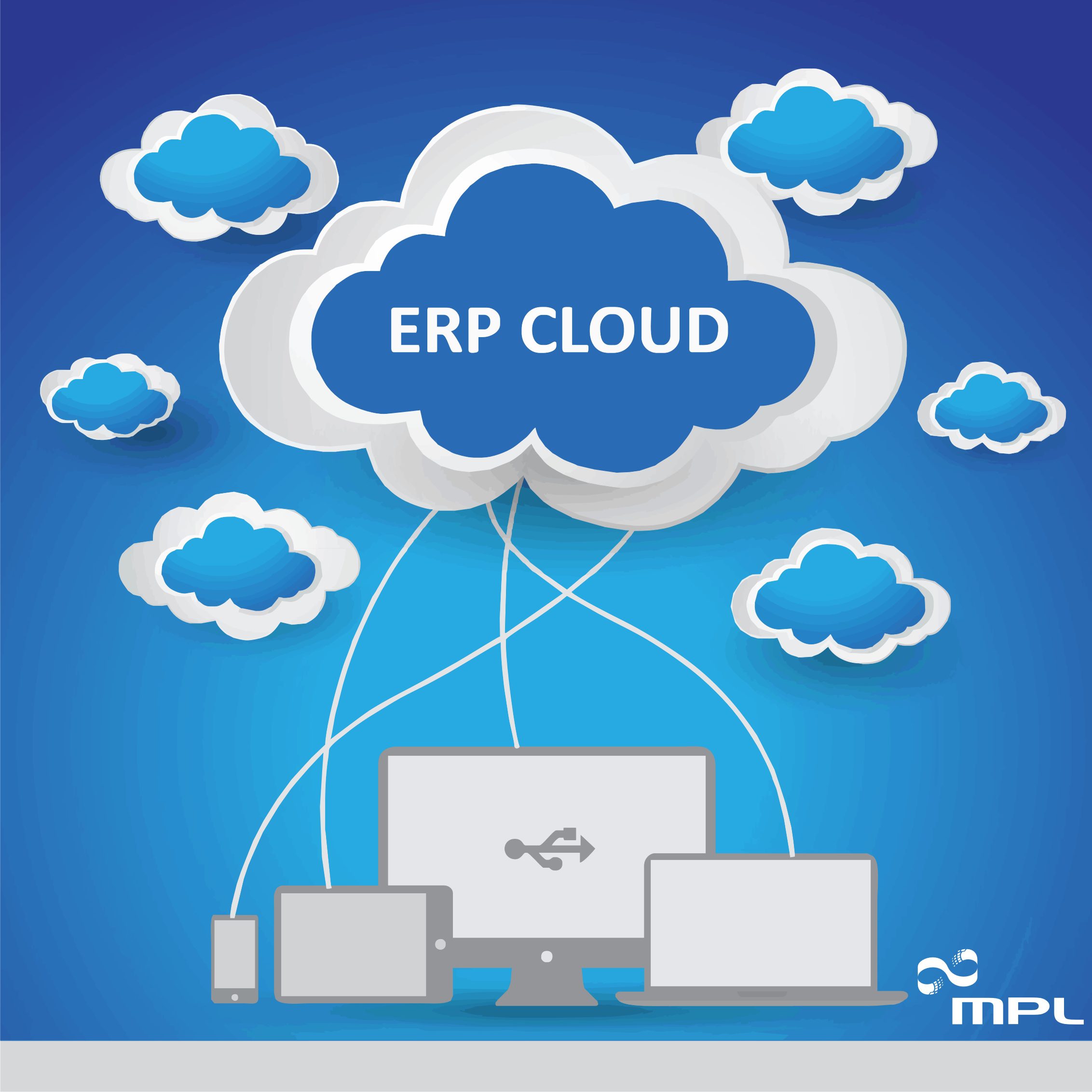
03 Nov ERP CLOUD – Advantages and Differences for On-premise.
Choosing a ERP.
It's a long road before that choice is made, but understanding that each ERP has specific disadvantages/advantages for each case, it guides you towards the best decision for your business processes.
Decide which ERP is more adherent to your processes is not so simple and is definitely much more than just choose a solution provider and implement. It is necessary to look at the market/competitors, suppliers and consultancy, in addition to the analysis of another thousand variables specific to your niche/process.
In the last three years, another aspect has also come into consideration: On-premise or cloud? cloud or On-premise?
To answer this question, it is necessary to analyze the advantages and disadvantages of each of these options.
On-premises.
- On-premise, uses the company's own or third-party infrastructure and servers;
- The costs of an on-premise implementation can be high, depending on the needs and environment in which the ERP will be installed. Given this greater need for investment, its acquisition is characterized as a capital investment (CAPEX);
- It allows for a greater level of customization. Although customizations represent higher costs for the company, they enable greater adherence of the ERP to specific business processes. The company pays more for ERP, but obtains a ERP “selfmade” for your needs.
- Implementation time is also usually longer and always adds hidden internal and external costs that are not taken into account when comparing with CLOUD.
cloud.
- In this modality, for a fixed monthly or quarterly price, the application is made available over the internet by a single supplier, without the need for its own IT infrastructure;
- As it is not an investment, it is economically viable as an operating cost (OPEX);
- The user company focuses on the business while IT management is managed by the solution provider CLOUD;
- If there is a need for specific customization for the company's business processes, the costs involved can be large and more complex;
- The implementation time is generally shorter and this makes the solution CLOUD more interesting for growing companies and for applications where processes are standardized by the market. An on-premise implementation can take months, while a solution CLOUD It takes weeks, sometimes days.
- It is possible that the life cycle of the system brings progressive expenses, depending on the project.
Technology constantly evolves. It optimizes business processes as a whole, mainly by adapting to market demands.
And now technology is taking a step forward, towards the future. And when we glimpse the future, we see that it is not 100% on-premise. The potential market for CLOUD, The new technology, not only because of the cost savings involved, but also because of the simplification it makes possible, is sure to occupy a significant share of the market in the future.
Sorry, the comment form is closed at this time.